


2026 Home Design Trends That Can Improve Resale Appeal in Naperville and Wheaton
Updated September 24, 2026 | By John Salidas, Real Estate Broker with The Salidas Group of @properties
The short answer: the 2026 design choices most likely to strengthen resale appeal are the ones that make a home feel current, functional and well maintained without forcing every buyer to share the owner’s exact taste. In Naperville and Wheaton, that often means a thoughtful mix of warm natural finishes, edited black-and-white contrast, improved lighting, practical kitchens and baths, stronger curb appeal, inviting outdoor space and visible energy-conscious upgrades.
No color, countertop or renovation guarantees a higher sale price. National studies identify broad patterns; the best decision still depends on a home’s age, architecture, condition, price range and likely buyer. The examples below are design inspiration—not photographs of current listings—and John Salidas’s local-market interpretation is identified separately from national research.

What the newest research says buyers are noticing
Recent national housing and remodeling research points to several overlapping themes. Zillow’s analysis of more than two million 2025 for-sale listings found growing attention to customized, character-rich and turnkey spaces, along with outdoor-living, spa-bath and sustainability language. Zonda’s 2025 Cost vs. Value research found that exterior projects dominated the highest national cost-recoupment rankings, while a minor kitchen remodel was the only interior project among its top five. Houzz’s current kitchen research also shows continued interest in wood cabinetry and durable stone or engineered-stone surfaces.
These findings are useful signals, not instructions to copy every trend. A feature mentioned in a listing may be associated with a stronger sale outcome without causing it, and national averages can differ from results in DuPage County.
1. Warm natural materials are replacing flat, all-gray rooms
Warm wood, creamy off-whites, woven texture, aged metal and earthy accents are showing staying power because they soften a space and photograph well. Homeowners do not need to replace every finish. Painting a cold gray room a warmer neutral, refinishing a wood floor, changing a stark light fixture or adding natural texture can shift the feel of the entire home.

2. Black-and-white design can look modern—and still sell well
Black-and-white design is especially effective when contrast is used as structure rather than decoration everywhere. White walls or cabinetry can keep rooms bright; black windows, lighting, hardware, fireplace details or an island can add definition. The result can feel architectural and luxurious without relying on a short-lived color.

For resale, balance is the key. Large areas of glossy black, highly patterned tile or multiple competing statement finishes may narrow the buyer pool. A simpler palette also gives future owners room to bring in their own art, rugs and furniture.
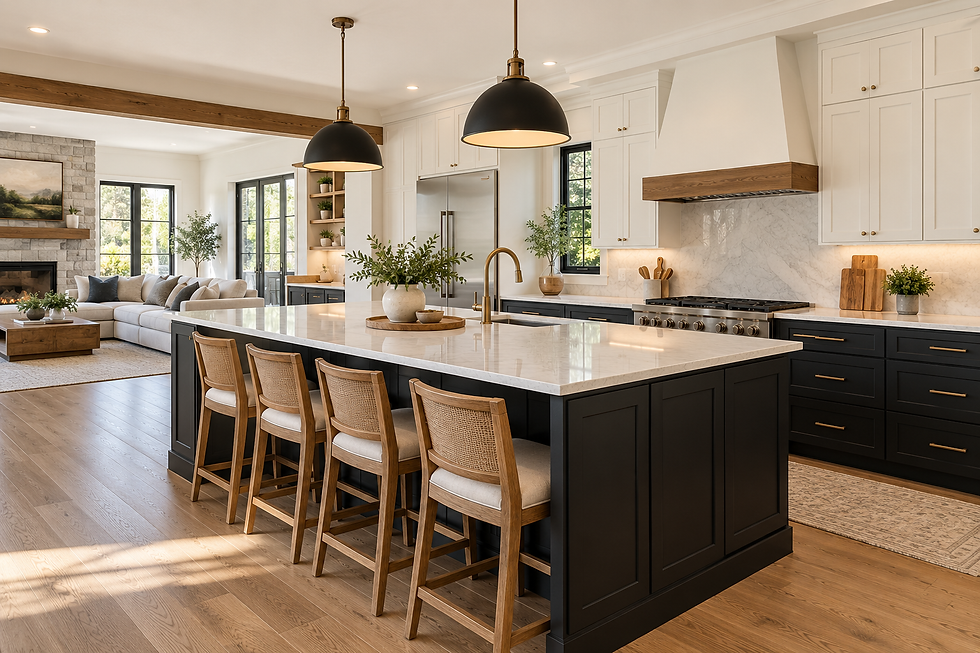
3. Kitchen improvements should look intentional, not pieced together
A kitchen does not need a full gut renovation to become more marketable. The strongest refreshes usually make the room read as one design: coordinated cabinet color, consistent hardware, appropriate lighting, clean grout and caulk, and counters that fit the home’s price point. Quartzite, engineered quartz and other durable surfaces remain popular, but condition and installation quality matter more than simply naming a fashionable material.
Replace dated cabinet pulls and knobs with one consistent finish.
Add under-cabinet or layered lighting where the room feels dim.
Repair damaged doors, drawers, grout and caulk before cosmetic upgrades.
Choose a backsplash that supports the counters instead of competing with them.
If painting cabinets, use professional preparation and a durable finish.
4. Bathrooms are becoming calmer and more spa-like
Buyers often respond to bathrooms that feel bright, clean and easy to maintain. A frameless shower, improved ventilation, layered lighting, warm metal or matte-black accents, organized storage and a calm palette can create a spa-like impression. Before spending heavily, fix leaks, cracked grout, stained caulk and poor lighting—small defects can make an otherwise attractive room feel neglected.

5. Curb appeal remains one of the clearest value signals
Exterior work earned several of the strongest national cost-recoupment results in Zonda’s 2025 report. That does not mean every Naperville or Wheaton owner should replace a garage door or add stone veneer. It does mean buyers form a condition-and-care judgment before they reach the front door.

Wash siding, walks and the front porch.
Trim shrubs so windows and the entrance are visible.
Refresh mulch and add a limited, coordinated planting palette.
Update tired house numbers, mailbox, door hardware and exterior lights.
Repair peeling paint, loose railings, damaged screens and cracked caulk.
6. Modern exteriors look best when they respect the house
White siding with black windows or trim remains a prominent modern look. It can be striking, but it should fit the home’s architecture and neighborhood context. On some houses, a softer off-white, charcoal accent, natural wood door or existing brick creates a more timeless result than maximum black-and-white contrast.

7. Outdoor living should be usable, not merely staged
Outdoor areas can expand the way buyers imagine using a home. A clean patio, defined dining or seating zone, practical lighting and healthy landscaping often matter more than an elaborate installation. In the western suburbs, durability and seasonal use deserve special attention: drainage, shade, storage and weather-resistant materials all affect long-term value.

8. Efficiency and smart-home features need to be understandable
Energy-conscious and electric-vehicle features are appearing more often in 2026 listing language. Useful upgrades may include air sealing, insulation, high-efficiency mechanicals, smart thermostats, updated electrical capacity or EV charging. Documentation matters: keep permits, warranties, service records and model information so buyers can understand what was improved and what it may mean for ownership.
Simple projects homeowners can complete before selling
The most effective pre-sale work is often less glamorous than a full remodel. These projects can improve presentation while preserving flexibility:
Use one coherent warm-neutral paint story through the main living areas.
Replace mismatched or undersized light fixtures and use consistent bulb temperatures.
Deep-clean windows, floors, trim, kitchens and bathrooms.
Repair visible deferred maintenance before adding decorative upgrades.
Edit furniture so rooms show their function and traffic flow.
Improve closet and mudroom organization to make storage feel more generous.
Use black accents selectively—lighting, frames, hardware or one focal feature.
Ask for a room-by-room resale consultation before committing to expensive work.
How I would apply these ideas in Naperville
Naperville includes a wide range of housing—from established neighborhoods to newer luxury and move-up homes—so design decisions should be calibrated to the specific property and competing inventory. In my experience, cohesive kitchens, flexible living areas, strong outdoor entertaining space, polished primary suites and move-in-ready maintenance can help a home stand apart. Higher-end buyers also tend to notice material quality and whether the renovation feels integrated with the rest of the house.
Explore more about buying and selling in Naperville.
How I would apply these ideas in Wheaton
Wheaton’s housing stock includes many older, custom and architecturally distinctive homes. Here, improvement often works best when it preserves character while solving practical concerns: lighting, storage, kitchen function, bath condition, mechanical confidence and a smooth connection to outdoor space. Modern black-and-white elements can work beautifully, but they should complement—not erase—the home’s original strengths.
Explore more about buying and selling in Wheaton.
John Salidas’s resale-first design framework
Before recommending a project, I look at five questions: What condition issues could reduce buyer confidence? Which features are buyers comparing at this price point? Does the change fit the home’s architecture? Will it improve photography and the in-person experience? Is the likely benefit reasonable relative to the cost and selling timeline?
That is where experienced local representation matters. The goal is not to chase every trend or make a home look like someone else’s. It is to identify the improvements that help buyers recognize the home’s quality, understand its value and feel confident acting.
Frequently asked questions
Does a black-and-white kitchen increase home value?
It can strengthen perceived style and presentation when the materials, condition and proportions fit the home, but no color scheme guarantees a higher sale price. For broad appeal, use contrast selectively and include warmth through wood, stone, lighting or textiles.
Should I renovate before selling in Naperville or Wheaton?
Not automatically. Repair condition issues first, then compare the cost and timeline of an upgrade with current competing homes and likely buyers. A focused refresh may outperform a major renovation when a sale is approaching.
What is the easiest way to make a home feel more current?
A coordinated paint palette, improved lighting, consistent hardware, clean grout and caulk, edited furnishings and stronger curb appeal can change how a home presents without rebuilding it.
Which renovation has the best return?
There is no universal winner for every property. National research has recently favored several exterior projects, but the best local choice depends on the home, neighborhood, condition, price range and cost of the work.
Can John Salidas help before I hire contractors?
Yes. A pre-sale consultation can help prioritize what to repair, refresh, leave alone or price around before money is committed.
Get a property-specific improvement plan
If you own a home in Naperville, Wheaton or another DuPage County community, I can walk through the property and help separate worthwhile preparation from expensive work that may not support your sale. The recommendations are based on the home, the likely buyer and current competing inventory—not a generic renovation checklist.
Sources and methodology
This article combines John Salidas’s local real-estate experience with national research from the National Association of REALTORS® Remodeling Impact Report, Zonda’s 2025 Cost vs. Value findings, Zillow’s 2026 home-feature analysis and current Houzz research. National findings are used as context; the Naperville and Wheaton sections are local professional interpretation. Updated September 24, 2026.

Comments